
Dog enrichment programme Exeter
Purposeful Play for Happy, Balanced Dogs
Give your dog a day filled with sensory games, structured exercise, and peaceful rest. Our enrichment programme satisfies your pup’s natural instincts while boosting their confidence and well-being.
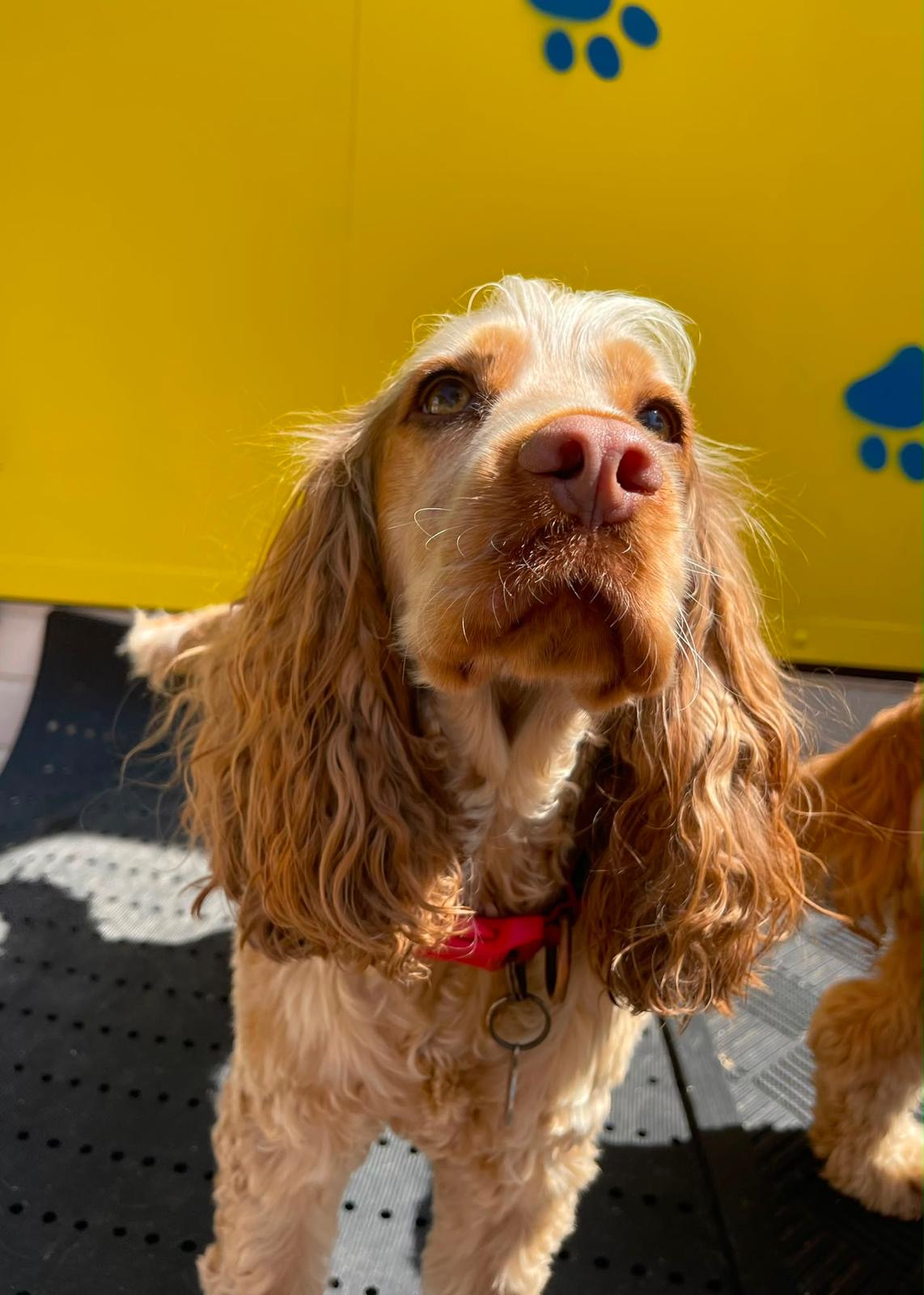
Dog Walking Service
As part of our dog enrichment programme in Exeter, we offer dog walking sessions conducted within a fully enclosed, private secure field. Designed to provide maximum safety, freedom, and enrichment for your dog.
Please note: To ensure group harmony, maintain our strict safety standards, and keep environmental stress low, this service is exclusively available to dogs registered in our Day Care program.
Individual Welfare assessments
All dogs undergo an initial assessment before attending day care and are continually monitored during their attendance. (Please see our Assessment Policy).
Behavioural Needs
Breed Characteristics
Confidence Levels
Physical Fitness & Health
Temperament
Individual Likes & Dislikes
Where necessary, activities may be modified or withdrawn to ensure the welfare and safety of the dog and others in care.
Sensory enrichment
Sand Pit Enrichment
Mental stimulation
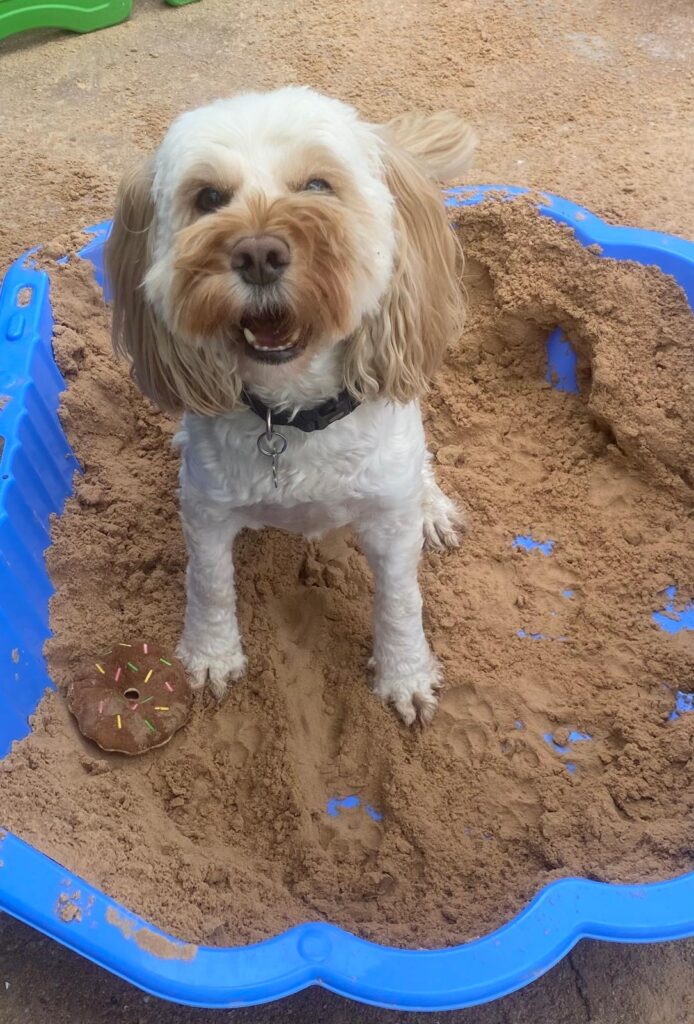
Dogs are provided with supervised access to designated sand pit where appropriate.
Sand pit activities encourage:
Sand pits are inspected regularly and maintained to ensure cleanliness and safety.
Scent Work
Cognitive skills
Scent-based activities encourage dogs to use their natural scenting abilities and problem-solving skills.
Activities we provide on a rotational basis (to prevent boredom):
Scent work provides valuable mental stimulation and can help build confidence, improve focus and encourage natural species-specifics behaviours.
Physical enrichment
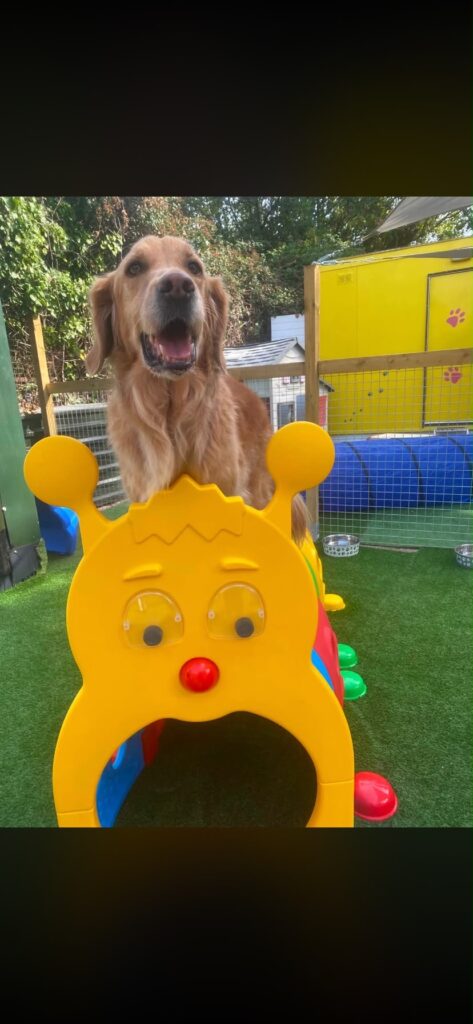
Structured agility, movement, and physical play tailored to age and capability. We focus on functional movement, balance, and controlled athletic fun.
Agility
We offer tunnels, hoops, weave poles, balance equipment and low-level obstacles, that build core stability and spatial awareness without straining joints.
Controlled Group Games
Small group play sessions in a controlled environment encourage confidence, problem-solving, coordination, body awareness and physical fitness.
Dogs are never forced to use equipment and are encouraged at their own pace.
Ball work and interactive play
Structured ball work may be used as part of a dog’s enrichment programme where appropriate. We rotate activities on a rotational basis to prevent boredom.
Retrieval Games
Focus Exercises
Chase Games
Engagement Activities
Sessions are carefully managed to prevent over-arousal and to encourage calm, positive interactions.
Puppy Development programme
Puppies attending day care are provided with age-appropriate enrichment designed to support healthy physical, behavioural and social development.
Socialisation
Puppies are introduced to positive experiences in a controlled and supervised manner, including:
Confidence Building
Activities we provide are:
Foundation Skills
Puppies may be supported in developing:
This is discussed with owners at the time of the puppy’s introduction to daycare.
Positive reinforcement training
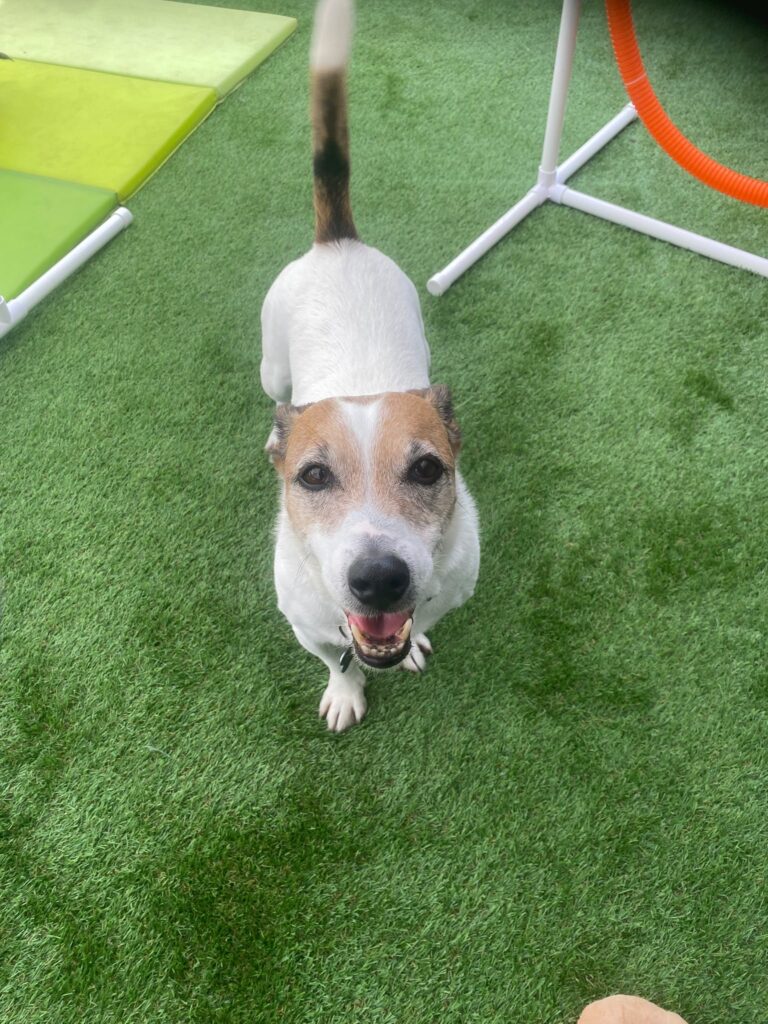
The Dog HQ Exeter uses positive reinforcement training methods to encourage desirable behaviours and support learning.
Training opportunities we provide:
Desired behaviours are rewarded using appropriate reinforcers such as toys, praise or play.
The Dog HQ Exeter does not use aversive, punitive or intimidation-based training methods.
Desired behaviours are rewarded using appropriate reinforcers such as toys, praise or play.
The Dog HQ Exeter does not use aversive, punitive or intimidation-based training methods.
Puppy Training (8 week mini programme):
|
Structure |
Twice daily short sessions + socialisation opportunities. |
|
Week 1-2 |
Handling, name recognition, gentle handling, crate/settle introduction. |
|
Week 3-4 |
Sit, touch/target, short recalls, leash walk basics in low distraction. |
|
Week 5-6 |
Leave it, impulse control (sit for food), short stay, social skills with other pups. |
|
Week 7-8 |
Generalisation (training in different areas), basic recall play. |
Puppy 10 Minute Session:
|
1 |
1-2 min warmup (name game, eye contact). |
|
2 |
4-6 short training trials (target/touch, sit), high reps, immediate rewards. |
|
3 |
2-3 min play/handler praise. |
|
4 |
1 min calm landing (mat settle, treat on mat). |
|
5 |
Agility 12 minute group |
|
6 |
2 min warmup and body check. |
|
7 |
6-8 obstacle rotations (each dog 1-2 runs). |
|
8 |
2 min calm reward and water. |
|
9 |
2 min rest. |
Rest and recovery
Puppies are provided with additional rest periods throughout the day to support healthy growth and development and to prevent over-stimulation.
|
Age |
Playtime |
Rest |
|---|---|---|
|
12 Weeks |
30 – 60 Minutes |
1 – 2 Hours |
|
3 – 6 Months |
1 – 2 Hours |
30 – 90 Minutes |
|
6 – 12 Months |
2 – 3 Hours |
30 – 90 Minutes |
This is only a guide and each dog should be treated individually based on breed, temperament and observations of behaviour.
welfare monitoring
All enrichment activities are supervised by trained staff. Where necessary, activities will be adjusted or discontinued to ensure the dog’s welfare remains the priority.
Objectives
- Improve physical fitness, mental stimulation and social skills.
- Reduce boredom related behaviours and stress.
- Teach basic obedience, confidence and early socialisation for puppies and young dogs using reward based methods.
- Provide structured, varied daily enrichment to suit mixed ages and energy levels.
Staff Awareness
- Reward based positive reinforcement training only.
- Group dogs by size, temperament and activity level; separate puppy group.
- Supervise all activities; use short sessions (8-20 min) with rest between.
- Rotate enrichment daily to prevent habituation.
Target Groups & Ratios
- Puppies (12-20 weeks): max 4-6 per handler, recommended staff ratio 1:6 for puppy training group purposes only (rotating the group)
- Young/adult high energy dogs: 1:10
- Mature/low energy dogs: 1:10 adjust ratios for reactive dogs or complex needs.
Dogs are monitored for signs of:
Stress
Fatigue
Frustration
Over-arousal
Illness
Discomfort
Daily Timetable
A structured flow ensuring optimal balance of activity, mental stimulation, and relaxation.
07:00 – 08:30
Arrival & Health Checks
Warm welcome, secure settling, calm greeting.
Morning Start
09:00 – 09:20
Puppy Training Group
If no puppies in 12-20 weeks, start short refresher training.
Training
09:30 – 10:30
Agility
Rotating groups.
Physical
10:30 – 11:00
Cool Down
Rest and calm environments.
Rest
11:00 – 11:30
Sandpit play
Digging & scent burying in small groups.
Cognitive
11:30 – 12:00
Supervised Play
Free play to encourage socialisation.
Social
12:00 – 13:00
Lunch
Quiet time and 1:1 checks.
Lunch
13:00 – 13:20
Scent Work
Novice to advanced.
Cognitive
13:30 – 13:50
Ball Games
Fetch variations.
Physical
14:00 – 14:20
Training Refreshers
Short session for recall, sit and focus.
Training
14:30 – 15:00
Enrichment rotation
Stimulation puzzle games, Kongs.
Cognitive
15:45 – 16:00
Break
Calm break, towel-down, water.
Rest
16:00 – 16:30
Wind-down
Grooming, socialisation, 1:1.
Rest
16:30 – 18:30
Collection
Feedback to owners, short handover notes.
Departure
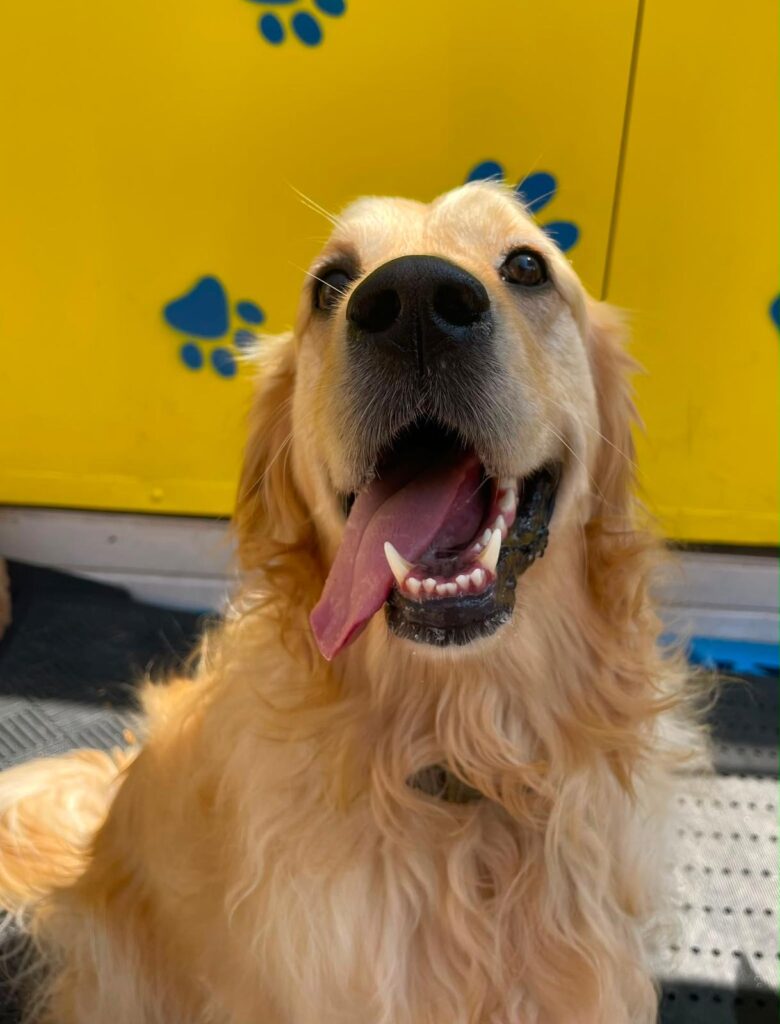
Our Commitment to Your Dog’s Well-Being
All enrichment activities are supervised by trained staff.
Unlock Your Dog’s Potential with Our Enrichment Programme
Every dog thrives when their mind and body are actively engaged. Our tailored enrichment programme combines stimulating games, physical activities, and peaceful rest to keep your pup happy, confident, and fulfilled.